What Are the Signs a Senior Needs Home Care?
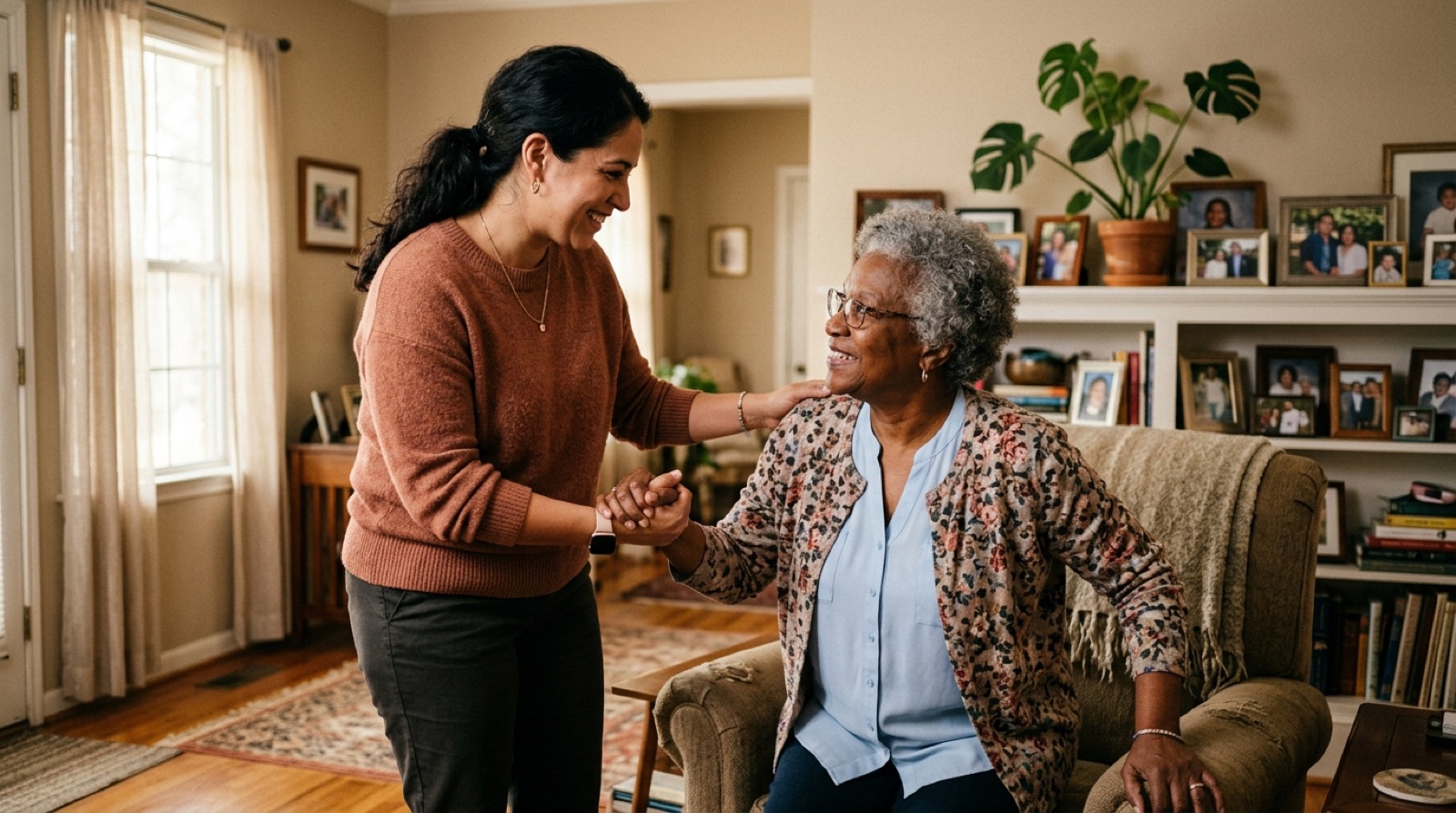
Reviewed by Jackeline Herrera, RN, BSN, Administrator, Bloom Home Care.
Bloom Home Care is licensed by Texas Health and Human Services as a Home and Community Support Services Agency, license number 024086.
This article provides general information about aging and home care and is not medical advice.
The clearest signs a senior needs home care show up in ordinary routines rather than in dramatic moments. Hygiene slips. Meals get skipped. Pills sit untouched in the bottle. Laundry piles up in a home that always stays tidy. Walking becomes slower and less steady.
None of these changes means a crisis is underway. Together, they usually mean an older adult is working harder than before to manage daily life, and that a little support could make each day safer and easier.
The sections below cover the changes families notice first. They also explain how to tell a rough week from a real pattern, and what to do once several signs show up at once.
Quick Answer: The Most Common Signs Elderly Adults Need Help at Home
The signs that the elderly need help at home usually appear as a cluster of small changes rather than a single event. Families most often notice personal hygiene slipping, sometimes with the same clothes worn several days in a row, along with growing difficulty in everyday tasks such as bathing, dressing, or standing up from a chair. Walking tends to become less steady, now and then, after a fall or a new fear of falling, and medication becomes a common trouble spot when doses get missed, bottles get mixed up, or refills never get picked up.
The kitchen often tells its own story, through weight loss, spoiled food, or a nearly empty refrigerator, while the home itself may become cluttered or harder to keep clean and safe. Memory changes can surface as missed appointments, repeated questions, or confusion on familiar routes, and money troubles show up as unopened mail, unpaid bills, or unusual spending. Many families also see a loved one pulling back from friends, hobbies, and regular outings. In a fair number of homes, the clearest sign of all is a family caregiver who has quietly become stretched too thin.
Why Daily Function Matters More Than Age
Age on its own says very little about whether an older adult needs support. Plenty of people in their late eighties run a household without help, while others need assistance in their sixties after a stroke or a hip fracture.
What matters is function. Care professionals sort daily tasks into two groups. The first is activities of daily living, the basic self-care tasks of bathing, dressing, grooming, eating, using the toilet, and moving from bed to chair. The second is instrumental activities of daily living, the more complex tasks that keep a household running, such as cooking, cleaning, shopping, managing money, taking medications, using the phone, and getting to appointments. Trouble in either group is the real signal, and when that trouble keeps coming back instead of passing, families start asking when does a senior need home care.
10 Common Signs a Senior Needs a Caregiver
The signs a senior needs a caregiver rarely arrive all at once. They tend to build slowly, which is why relatives who visit occasionally often spot them before the people who see the senior every day.
1. Changes in Personal Hygiene and Grooming
A change in appearance is often the first thing relatives notice. It may be unwashed hair, a new body odor, an unshaven face on someone who always took care to shave, or the same outfit worn all week. Bathing tends to be one of the earliest tasks to become difficult, and the reason is usually safety rather than a loss of pride. Slippery tile and a high tub wall can turn a lifelong routine into something that feels genuinely risky.
2. Difficulty With Everyday Activities
Everyday activities start to take more effort, and the small hesitations tell the story. An older adult may grip the arms of a chair to stand, take the stairs one careful step at a time, or struggle with buttons and zippers. Housework slips too, so the vacuum sits in the hallway for a week and the laundry waits longer than it used to. Meals often get simpler as cooking becomes tiring, and cereal for dinner turns into a habit rather than an occasional shortcut.
3. Unsteady Walking, Near Misses, and Falls
Falls are one of the most serious risks in senior care. The CDC reports that about one in four adults age 65 and older falls each year, and the injuries that follow often change what a person can safely manage alone. The warning signs tend to appear well before any fall. A senior may begin holding onto furniture while moving through the house, walk with a slower or wider gait, show unexplained bruises, or start refusing to leave home because the risk feels too high.
4. Missed Medications and Medication Confusion
Medication is one of the easiest routines to lose track of, and the clues are easy to miss. There may be leftover doses in the pill organizer, duplicate bottles of the same prescription, refills that nobody picked up, or real uncertainty about which pill does what. Missed doses matter, and so do accidental double doses, since both can affect blood pressure, blood sugar, and heart conditions. Whenever something looks off, a pharmacist or physician should review the full medication list.
5. Poor Nutrition and an Empty Kitchen
Weight loss often shows up first in loose clothing and a watch band that no longer fits. Other clues sit in the kitchen, from expired food and an empty freezer to unopened meal deliveries or a scorched pan that points to cooking left unattended. Appetite does fade with age for many people, but a sharp drop still deserves attention, because it can also signal depression, dental pain, or an untreated medical condition.
6. A Home That Is No Longer Kept Up
The condition of the house often says more than a phone call ever could. Overflowing trash, dishes stacked in the sink, dying plants, spoiled milk, and an uncut lawn all suggest that keeping up has become too much. Signs of damage matter just as much, whether that is a burn mark on the stove, a fresh dent on the car, or a smoke detector with the battery pulled out to stop the chirping.
7. Increased Forgetfulness and Confusion
Some memory change is a normal part of aging, and misplacing keys or recalling a name a few minutes late is common. Other changes fall outside that range and deserve a closer look, such as repeating the same question within a single conversation, missing several appointments in a row, getting lost on a familiar route, or losing the steps to a task done for years. Any noticeable change in memory or thinking is worth having assessed by a physician.
8. Withdrawal From People and Activities
An older adult who has stopped attending church, quit a long-standing card group, or simply stopped answering the phone may be coping with hearing loss, vision changes, limited mobility, grief, or depression. The isolation itself also carries risk, since long stretches of loneliness are linked to higher rates of heart disease, memory decline, and depression. A social world that keeps shrinking is worth taking seriously.
9. Trouble Managing Bills, Mail, and Paperwork
Money is often one of the first complex areas to slip, and the evidence tends to gather in plain sight. Stacks of unopened mail, utility shut-off notices, checks written twice, or charges from companies nobody recognizes all point to the same struggle. Trouble here also opens the door to scams that target older adults. Money is an uncomfortable subject in most families, yet it holds some of the clearest proof that daily tasks have become too much to handle alone.
10. Growing Strain on Family Caregivers
The senior is not the only person worth watching. A spouse may have quietly become a full-time caregiver, an adult child might drive across town every evening, or a relative could be missing work to keep up with appointments. Caregiver exhaustion builds slowly and often goes unspoken. When an arrangement only holds together because one person is running on empty, it is already fragile. Families in Cypress and along the Highway 290 corridor often bring in professional home care at this stage, so a professional caregiver can share the daily load before burnout sets in.
One Sign on Its Own Rarely Means Home Care Is Needed
A single missed appointment after a bad night of sleep is not a pattern. A quiet week after a friend's funeral is not withdrawal. Grief, a new medication, a virus, or a brutal Houston summer can all cause changes that fade on their own.
Three questions help separate a rough patch from a real shift. The first is whether the change is lasting, because a pattern that holds for several weeks carries far more weight than one hard afternoon. The second is whether it affects safety, since anything involving medication, driving, cooking, or fall risk deserves faster attention than a messy garage. The third is whether the trend is moving in one direction, as slow decline across several areas usually means the current setup has stopped working. When the answers point the same way, it is generally time to look more closely at support.
When to Consider Home Care for Elderly Family Members
Most families reach this point gradually rather than overnight. The common turning points for when to consider home care for elderly relatives tend to share a theme. A hospital stay or a fall can suddenly change what a senior is able to manage alone. A new diagnosis such as dementia, Parkinson's disease, or heart failure often signals that more help is on the way. The death of a spouse who had quietly handled the cooking, driving, or medication reminders can leave a serious gap almost overnight. Sometimes the turning point is a family caregiver who can no longer keep up with the schedule, and sometimes it is simply a senior who wants to stay at home and needs support to do it safely.
Home care does not have to be an all-or-nothing decision. Many families across Houston begin with just a few hours a week from a home care agency in Katy, TX for bathing help, meal preparation, and rides to appointments, then adjust the schedule as needs change.
Not sure whether it is time? Bloom Home Care offers a free in-home assessment to help Houston families understand what level of support may be appropriate.
What Non-Medical Home Care Covers, and What It Does Not
Non-medical home care, also called personal care or companion care, supports daily living rather than treating a medical condition. A caregiver typically helps with bathing, dressing, grooming, and toileting, along with meal planning, cooking, and help with eating. The same visit might include light housekeeping and laundry, medication reminders, which are not the same as administering medication, and transportation to appointments, errands, and social outings. Many families also value the companionship and supervision this brings for someone who should not be alone, together with steady mobility support and fall prevention inside the home.
This kind of care does not include diagnosis, wound care, injections, or physical therapy. Those are skilled services delivered through home health care, which a physician orders. Medicare may cover home health services when a doctor certifies a skilled need, though Medicare does not pay for personal care on its own when no skilled need exists.
Signs That Call for Medical Attention Rather Than Home Care
Some changes call for a doctor rather than a care schedule, and a few call for emergency care right away. Certain warning signs mean it is time to call 911 without waiting. These include sudden weakness or numbness on one side of the body, trouble speaking or drooping on one side of the face, chest pain or difficulty breathing, and any fall that involves a head injury or a suspected broken bone.
Other changes are not emergencies but still deserve a call to the physician within the same week. Sudden confusion or a sharp change in alertness can point to an infection, dehydration, or a medication problem. Unexplained weight loss, a new tremor, new incontinence, or a clear change in walking all warrant a prompt visit, as do signs of depression such as loss of interest, hopelessness, or disrupted sleep. Repeated falls belong on this list too, even the ones that caused no injury. In every case, home care supports the plan a physician puts in place, and it is not a substitute for a proper evaluation.
What Families Can Do After Noticing Several Warning Signs
Write Down What Has Actually Changed
Specific notes work far better than general worry. Dates, concrete examples, and a quick photo of the pantry or the pillbox can turn a difficult conversation into a factual one, and they give the physician something solid to work with.
Schedule a Medical Evaluation First
Many of these signs have treatable causes. Hearing loss, vision changes, thyroid problems, urinary tract infections, medication interactions, vitamin deficiencies, and depression can all look like general decline. A full check-up belongs at the front of the process, before any long-term decision gets made.
Start the Conversation Early and Gently
The suggestion of needing help can land badly for someone who has been independent for sixty years, so timing and framing matter. These conversations tend to go better when they happen during a calm moment rather than in the middle of a crisis, and when they focus on one specific task, such as cooking every night, instead of on ability in general. It also helps to ask what the senior wants before any plan gets announced, to frame care as a way to stay at home longer, which is what most older adults say they want, and to include the senior in interviewing caregivers and setting the schedule.
The signs aging parents need help are usually visible to the parent as well. Many older adults have already noticed the same changes and have been quietly worried about losing their independence, which makes for a very different conversation from the one families often expect.
Begin With a Small Amount of Care
A trial of a few hours a week lowers the stakes for everyone. Starting with a task the senior already dislikes, such as housekeeping or grocery shopping, tends to meet far less resistance than starting with bathing. Trust builds first, and personal care becomes easier to accept later.
Get the Whole Family on the Same Page
Siblings who live far away often see a different version of the situation than the relative who lives nearby. Sharing the same written notes gives everyone the same picture, and it helps prevent the disagreements that can stall a decision for months.
Frequently Asked Questions
What are the first signs an elderly person needs help at home?
Personal hygiene and housekeeping usually change first, followed by cooking and medication management. Bathing starts to feel unsafe, laundry piles up, meals get simpler, and doses get missed. These tasks take more energy, balance, and planning than most people expect.
At what age do most seniors need home care?
There is no set age. Some adults live independently into their nineties, while others need support in their sixties after an illness or injury. How well a person manages daily activities matters far more than the number on a birth certificate.
How many signs should appear before a family looks into home care?
There is no fixed number. A pattern across two or three areas that lasts several weeks is usually enough reason to explore options, and so is a single serious safety issue, such as a fall or a medication error.
What is the difference between home care and home health care?
Home care covers non-medical support with daily activities such as bathing, meals, housekeeping, and transportation. Home health care covers skilled clinical services such as nursing and physical therapy, ordered by a physician. Many families use both at the same time.
Can a senior refuse home care?
An adult with decision-making capacity has the right to refuse care. Families usually make more progress by starting small, letting the senior help choose the caregiver, and returning to the conversation after a doctor visit rather than pushing for an immediate answer.
Does Medicare pay for home care?
Medicare does not cover personal care or companion care on its own. It may cover home health services when a physician certifies a skilled need. Non-medical care is usually paid privately or through long-term care insurance. Some families also use state Medicaid programs or veterans benefits, though not every agency accepts them, so it is worth confirming payment options with the agency directly.
How can families tell whether memory changes are normal aging or something more?
Forgetting a name now and then, or misplacing keys, is common with age. Repeating questions within a single conversation, getting lost in familiar places, or losing the ability to finish routine tasks falls outside typical aging and should be evaluated by a physician.
Talking Through the Next Step With Bloom Home Care
The signs a senior needs home care rarely arrive with a clear answer attached. Noticing several of them at once raises a hard question: is it time, or is it still too early? Very few families feel certain, and certainty is not a requirement for asking.
Bloom Home Care works with families across the Greater Houston area who are standing exactly there, from Katy and Cypress to Spring, The Woodlands, and Sugar Land. The team is glad to talk through what has changed and which options fit, with no pressure to decide on the spot.
The usual next step is a free in-home assessment. The nursing director or another qualified supervisor visits, spends about an hour going through daily routines, personal care needs, mobility, safety, and scheduling, and the family receives a proposed care plan, schedule, and written rate information afterward.
Families who are unsure whether an older adult needs help at home can speak with the Bloom Home Care team about the situation and the care options available. Asking questions carries no obligation, and the phone line at 281-975-6044 is answered 24 hours a day.
More from the Bloom Home Care Blog
What to Expect During Your First Home Care Consultation: A Family Guide
A relaxed, no-pressure meeting is usually the first real step toward home care. Here's exactly what happens, what to prepare, and the questions worth asking.
What Should You Ask Before Hiring a Home Caregiver?
The interview is where most of the decision gets made. Here are the questions that matter, what a strong answer sounds like, and the warning signs to watch for.
How to Deal With an Elderly Parent Who Refuses Help
Resistance is rarely about the help itself. Here's why parents refuse support, eight steps to move the conversation forward, and what to do if they still say no.